
The full Discovery Lab article
When Your Child Knows the Answer but Stays Quiet
Silence can catch your attention. A pattern can help you know what to do next.
At home, your child explains the whole idea before you’ve even found the right page. Later, the teacher tells you that same child rarely volunteers. You may feel confused, frustrated, or worried that something important is disappearing.
Start by taking the pressure off yourself and your child. You don’t have to explain the silence immediately. You only need to become a careful observer and a safe person to talk with.
Start with what you can actually know
Replace a conclusion with a description. “She’s hiding how smart she is” becomes “She talks through hard ideas at home and gives one-word answers when I ask about class.” “He’s bored” becomes “He finishes quickly and doesn’t want to return to the work.”
Descriptions keep the door open. They also give your child and teacher something specific to respond to.
The same silence can mean different things
Your child may recognize one of these experiences, several of them, or none of them. Treat these as possibilities to explore, not labels to apply.
They need more thinking time
Some children have a full answer forming but aren’t ready when the room moves on. Quiet can be a pause, not an empty space.
Attention feels uncomfortable
Knowing the answer can bring eyes, comments, or expectations. Your child may be protecting themselves from the spotlight, not hiding who they are.
They aren’t sure it’s worth saying
The work may feel familiar, repetitive, or disconnected from what interests them. That calls for curiosity, not a character judgment.
Speaking feels genuinely hard
For some children, talking in certain settings brings real distress. Don’t assume defiance or force a public performance.
Ask without putting your child onstage
Choose a quiet moment, not the car ride home after a hard day or the minute you hear a concern. Use one question, then give the answer time to arrive.
Words you can borrow
- “When is it easiest to share an idea at school?”
- “Is there a moment when you know what you want to say but something gets in the way?”
- “Would it help to tell the teacher your idea another way?”
If your child says “I don’t know,” that can be an honest answer. Try, “That’s okay. We can notice it together,” and let the conversation rest.
Watch the pattern for one week
You don’t need a complicated chart. Jot down four things when a moment catches your attention. Keep it light. You’re looking for clues, not building a case.
- Where? Home, class, activity, group
- With whom? Adult, friend, unfamiliar group
- What kind of task? New, easy, public, timed
- What helped? Time, privacy, writing, one person
Bring the teacher into the picture
Begin with partnership. The teacher sees moments you can’t see, and you know parts of your child the classroom may not reveal. Share one example and ask:
- When do you see my child participate most comfortably?
- Does the pattern change in a pair, small group, or written response?
- What happens just before my child pulls back?
- What is one small option we could try and revisit in two weeks?
Try one small experiment together
A child who doesn’t want to answer in front of the whole class may be comfortable writing first, sharing with a partner, answering privately, or knowing a question is coming. Ask the teacher which option fits the classroom, then choose one. A small experiment tells you more than a big push.
At home, keep welcoming the thinking without turning every bright moment into a performance. “Tell me more” is often enough.
Build a participation menu, not a ladder your child has to climb
It can be tempting to make a sequence: first answer privately, then in a pair, then in a group, then in front of the class. That may fit one child. For another, it quietly turns every comfortable option into a temporary stop on the way to a public performance they never chose.
Instead, build a small menu with your child and teacher. The options might be:
- write an idea before discussion;
- show the teacher a response privately;
- share with one partner;
- let a partner read the shared idea;
- answer a question the child knows is coming;
- ask a question instead of giving an answer;
- pass today and try another setting later.
Then give the experiment one clear job.
If your child says, I lose the words when everyone looks at me, the job may be to preserve the idea long enough to share it. Writing first might help.
If your child says, The question is already over before I decide, the job may be more thinking time. Knowing the question is coming might help.
If your child says, I don't want everyone talking about my answer, the job may be privacy, not practice. A private response may be the right access point rather than a step to remove.
Know when this needs more than a home strategy
Sometimes quiet is part of temperament or a temporary situation. Sometimes it brings strong distress or keeps a child from asking for help, meeting everyday needs, or participating across settings. If that’s what you’re seeing, talk with your child’s teacher and pediatrician or another appropriate professional. This article can help you notice and ask better questions, but it can’t tell you what is happening for your individual child.
Look for progress, not a personality change
Progress may be one honest answer at home, one written idea shared with a teacher, one question asked privately, or your child naming what makes a setting easier. You’re not trying to turn a quiet child into the loudest voice in the room. You’re helping your child find ways to be understood.
Three Things Worth Remembering
Describe the pattern before deciding what it means.
Ask one calm question and give the answer room.
Try one small change with your child and teacher.
Pause to Ponder
Where does your child’s thinking come out most easily, and what is that moment giving them?
Show It Your Way
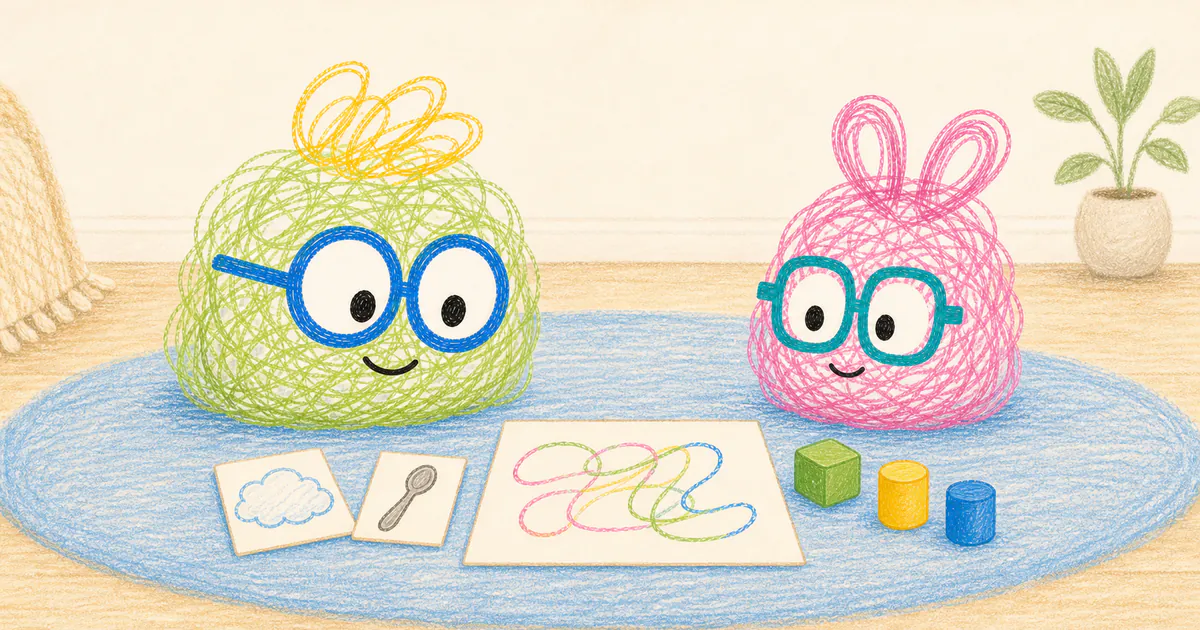
Pick one tiny idea, share it in a way that feels comfortable, then swap roles and try another round together. You can talk, point, draw, act, whisper, or pass.