

Growth mindset is a belief, not a child type
Carol Dweck and David Yeager describe a growth mindset as the belief that human capacities are not fixed and can develop over time.
That does not divide children into two permanent groups. Your child may welcome coaching in one setting and protect themselves from judgment in another. They may persist when the task makes sense and freeze when they do not know what the directions mean.
Instead of asking, Does my child have a growth mindset?, ask:
What is happening in this learning moment?
That question keeps you close to what your child can show you.
Effort is information, not the whole plan
Effort matters, but praising effort by itself can miss the teaching problem.
Imagine that your child is solving a fraction problem. They keep applying the same rule and keep getting an answer that does not make sense.
EFFORT-ONLY OBSERVATION
You worked so hard notices the energy they spent.
LOCATE THE SNAG
Show me the step where the numbers stopped making sense helps locate the snag.
OPEN A SUPPORT
Would a picture, a worked example, or one smaller problem help? opens a different route.
You are helping your child change the approach instead of repeating it.
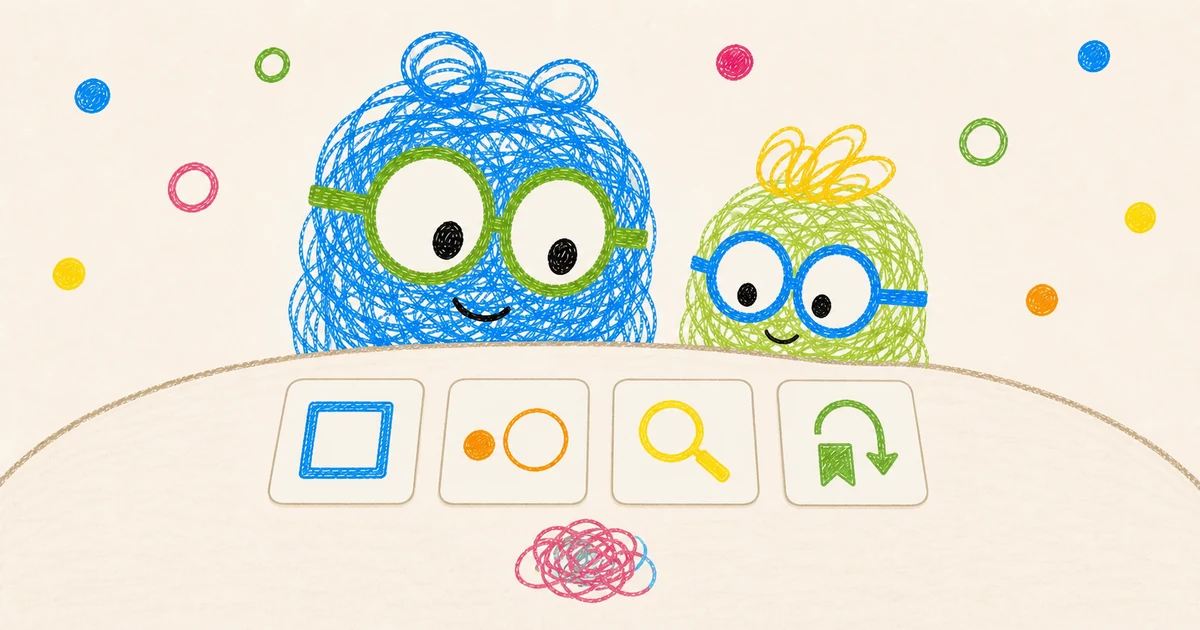
Use the four strategy switches
VIEW
1. Change the view
Some ideas become clearer when the representation changes.
Your child might draw a picture, build a model, say the idea aloud, act out the sequence, or connect symbols to a concrete example.
Ask:
What could we see or touch that would make this less hidden?
SIZE
2. Change the size
A task can be too large to inspect. Choose one sentence, one example, one movement, or one decision.
Ask:
Which small part would tell us the most?
Smaller does not mean easier forever. It creates a place where you and your child can see what is understood and what needs support.
INFORMATION
3. Get information
Sometimes the next move is not more practice. It is a hint, an example, a corrected direction, feedback, direct teaching, or a missing foundation.
Ask:
What do we need to know before another try would help?
Getting information is part of learning. It is not a shortcut around it.
PAUSE + RETURN
4. Pause and return
A pause can protect attention, lower pressure, and make another approach possible.
Make it concrete:
Let's mark the exact place we stopped. Do you want to return after dinner, tomorrow, or with your teacher?
The useful part is knowing what you are returning to and what will be different.
STRATEGY SWITCH
Watch one Strategy Switch happen at the kitchen table
Your child is writing a paragraph and has erased the opening sentence four times.
Try harder points back to the same blank line. A Strategy Switch helps you find out what is actually stuck.
First ask:
What are you trying to make this first sentence do?
Your child says, It has to explain the whole thing.
Now the problem is visible. The sentence is carrying the job of the entire paragraph.
CHANGE THE SIZE
Change the size: Ask your child to say only what the paragraph is mostly about.
CHANGE THE VIEW
Change the view: Let them tell the idea aloud while you write three of their exact words on a scrap of paper.
GET INFORMATION
Get information: Look at the assignment together. Does it ask for a topic sentence, an opinion, a fact, or something else?
PAUSE + RETURN
Pause and return: If the pressure is still rising, save the three words and name when the next try will happen.
Try a different switch first next time. If changing the view helps but changing the size does not, keep that evidence. Growth isn't proved by enduring every approach. It becomes visible when your child can notice what an approach produced and choose a more useful next move.
Praise the process you can actually see
General praise can feel pleasant, but it may not tell your child what to repeat.
Name something observable:
- You noticed that the drawing did not match the equation.
- You asked for an example before doing ten more.
- You divided the direction into two parts.
- You stopped before frustration took over and made a plan to return.
These lines do not guess at your child's character. They help your child recognize a move they can use again.
Do not turn mindset into blame
A child cannot positive-think their way past every barrier.
The instruction may be unclear. The task may depend on knowledge that has not been taught. The level may offer too little challenge or too much unsupported demand. Stress, disability, language, attention, sensory load, or the learning environment may matter.
Growth-minded support includes changing the conditions around the learner. It does not require your child to carry every mismatch alone.
You can say:
We have tried two approaches, and this still is not accessible. We need more information or a different kind of help.
Bring useful evidence to school
You do not need to tell the teacher that your child lacks motivation or has a fixed mindset. Bring one observable pattern.
For example:
My child can explain the idea with blocks, but loses the meaning when the same idea is written only in symbols. Could you tell us what representation you are using in class and what they should understand before moving on?
ORThe first five problems are accurate, then the same error appears. Could we compare the first correct step with the first incorrect one and decide what to practice?
This invites the teacher's knowledge and gives both of you a specific place to look.
Keep the promise honest
Growth mindset does not mean You can do anything if you work hard enough. It means today's performance does not have to be the final word, and learning can include new strategies, instruction, feedback, practice, support, and changing goals.
The large national mindset study often discussed in schools involved ninth-grade students, and its results differed across students and school settings. That is one reason this article does not promise an achievement result for every K5 child.
At the kitchen table, use the evidence in front of you and choose one respectful next move.
Your next small step
Choose one low-pressure snag and ask:
- What are you trying?
- What happened?
- What one thing could change?
- Do you want to test it now, later, or with help?
If your child says stop, that is information too. You can keep listening and decide together what support belongs next.
Three Things Worth Remembering
Effort is information, not the whole learning plan.
Change the approach, information, support, or conditions when repeating is not helping.
Pausing or asking for direct help can be a capable next move.
Pause to Ponder
When your child gets stuck, which change would make the next try more useful?
Strategy Switch Lab
Pick one small learning snag. We'll change one thing and see what happens.
K5 PLAY BREAK
Head-to-Tail Word Ladder
Transform HEAD into TAIL one clue at a time. Change exactly one letter on every rung, and keep every step a real word.
Start the Word Ladder