
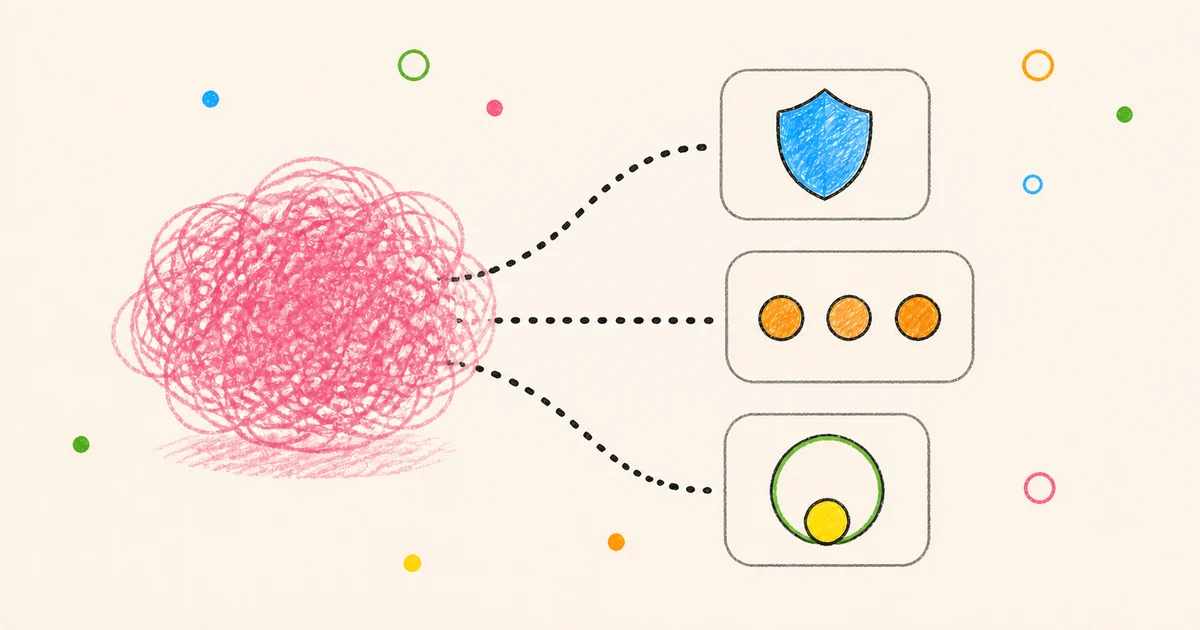

The moment behind the question
Maybe your child is furious over a broken pencil. Maybe they are quiet about something that has happened every day on the bus. The volume of the reaction does not tell you everything you need to know.
A one-time disappointment can feel enormous. A repeated problem can come out as a shrug. Begin by listening for the experience before you decide what lesson belongs there.
You might say:
Tell me what happened from the beginning.
Then reflect what you heard:
You worked hard on that, and now it is gone.
You have tried to avoid that seat, but it keeps happening.
Listening first does not mean agreeing with every conclusion or fixing everything immediately. It gives you enough information to choose the next question.
Question 1: Is anyone unsafe right now?
Safety comes before perspective practice.
Ask whether anyone is hurt, threatened, trapped, touched in an unwanted way, or afraid that someone may be harmed right now. If the answer is yes or maybe, bring in a trusted adult immediately. In an emergency that needs police, fire, or ambulance help, call 911.
If your child says something happened online or at school that makes them feel unsafe, do not require them to confront the other child first. They may walk away, stay near safer people, and tell an adult.
Use a steady line:
Thank you for telling me. You are not in trouble. I am going to help.
Question 2: Is it repeating, worsening, or hard to stop?
Some problems need a plan even when there is no immediate emergency.
Ask:
Has this happened before?
Is it getting harder to avoid or stop?
Does handling it alone feel like too much?
If bullying may be involved, listen and focus on your child. Do not tell them to ignore it, fight back, or repair the situation alone. A parent, teacher, counselor, coach, or another trusted adult can help make and follow through on a plan.
Keep your school partnership concrete and calm:
My child reports that this happened on Monday, Tuesday, and today near the bus line. Could you help us identify the adult they should go to and the next step we can expect?
That gives the school an observable pattern and a practical request.
Question 3: What one step feels possible?
If your child is safe and this appears to be a one-time, manageable snag, offer choices without withdrawing support.
They might:
- try again with a smaller first step
- use clear words to ask for what they need
- take a pause and decide later
- ask you to join them
For the fallen block tower, that might sound like:
Do you want help rebuilding the base, or do you want me to sit here while you begin?
For a changed game rule:
Do you want to ask what rule everyone is using, choose another game, or have me help you think of words?
Stay close enough to help while your child practices a next step they can actually use.
Three Questions, One Next Step
Choose a pretend situation, follow three questions, and find one supported next step together. Your child may point, speak, act, pass, or ask for help.
Same reaction · different facts
Three similar reactions can need three different responses
Your child bursts through the door and says, I'm never going back. The feeling is intense in all three of these moments. The next adult move is different.
The model broke during science. Your child spent days building it, another student bumped the table, and the pieces scattered. Nobody is unsafe and it has not been repeating.
The same joke has followed your child for a week. Nothing in today's sentence sounds like an emergency, but the pattern is repeating and your child cannot make it stop alone.
A message contains a threat for tomorrow.
Ordinary repair or try-again support
Begin with the loss. Then ask whether your child wants help rebuilding one section, a pause, or words for telling the teacher what happened.
Trusted-adult plan
This needs adult follow-through. Record the concrete pattern and contact the school with a safety-and-support question.
Urgent adult or emergency help
Do not work through the ordinary frustration choices first. Preserve the message with adult help, stay with your child, and contact the appropriate adults or emergency support for the situation.
The phrase I'm never going back did not tell you which response belonged. Listening for safety, pattern, and desired support did.
You can say:
I hear how big this feels. I need to check safety first, then whether this has kept happening, then what help you want from me.
That sequence helps you stay calm without minimizing the feeling or treating every hard moment as the same kind of problem.
Keep feelings and action in different lanes
You can fully accept a feeling without treating every situation as an emergency.
You are really disappointed names the feeling.
Let's check whether anyone is unsafe checks the situation.
Would you like help or one try with me nearby? chooses support.
Your child does not have to make the feeling smaller to earn your help. You do not have to solve the whole situation before acknowledging the feeling.
Build a trusted-adult map before it is needed
During a calm moment, ask your child to name adults they could tell at home, school, and activities. Younger children can point to photos or draw the places. Older children can add how they would reach each person.
Practice one opening sentence:
I need help with something.
Another useful option is:
I am not sure how serious this is, but I want to tell you.
If the first adult does not help, your child may tell another. Asking again is not tattling. It is continuing to seek support.
A separate urgent-support note for parents
Your next small step
Pick one ordinary frustration today. Skip the size label and ask:
- Is anyone unsafe?
- Has it kept happening, or does it feel hard to stop?
- Do you want help, or one try with me nearby?
Your child may answer with words, a point, a gesture, or I don't know. You can still decide the next step together.
Three Things Worth Remembering
A big feeling and immediate danger are different questions.
Repeating or hard-to-stop problems deserve adult support and a plan.
Your child may ask for help at any point.
Pause to Ponder
Which trusted adult could your child approach when they are not sure how serious something is?