
Skip to content

Stories That Teach

What Abe Lincoln Can Teach Your Child About Learning

A K5 Gifted Discovery Lab article.

Lincoln’s story isn’t proof that struggle always leads to greatness.

It does show something smaller and more useful: learning can be built a little at a time.

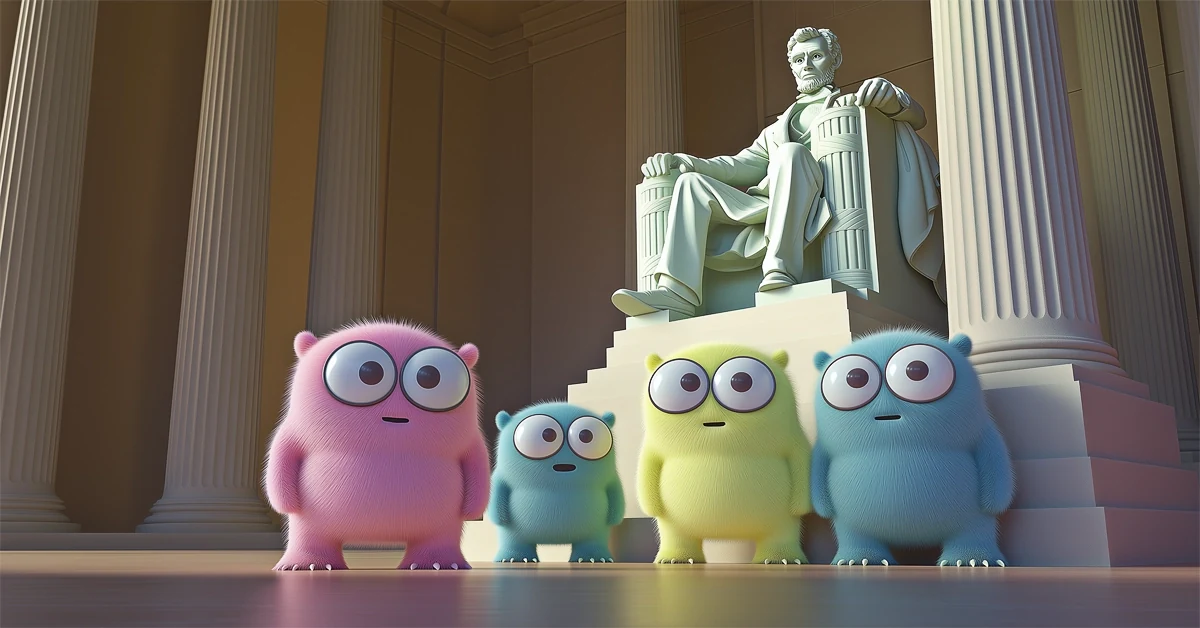
Four colorful K5 creatures stand together inside the Lincoln Memorial beneath the seated statue of Abraham Lincoln.
A careful history question can become one useful next step for learning.
Start here

You don’t have to know everything yet. Find one part you can learn next.

ONE HONEST QUESTION

Find the next part, not the whole answer

Your child closes the book, pushes away the problem, or says, I do not know how to do this.

It is tempting to answer with a speech about perseverance. Try a smaller move first:

Abraham Lincoln had limited formal schooling. In his own account, he described his later learning as something he picked up from time to time. He kept reading and studying as he needed to understand more.

Your child does not need to copy Lincoln or turn a hard night into an inspirational story. They can practice the smaller habit of letting one honest question lead to one useful next step.

FIELD NOTES

Use a three-line learning notebook

Take one sheet of paper or open three notes on your phone:

  1. 01

    I wonder

    Write the real question

  2. 02

    I found

    Record one fact and where it came from

  3. 03

    Now I think

    Say what changed after checking.

SOURCE DETECTIVE SAMPLE

Suppose your child sees a quote card that claims Lincoln said failure was impossible.

The notebook might read:

  1. I wonder: Did Lincoln actually say this?
  2. I found: The card does not name a speech, letter, date, archive, or transcript.
  3. Now I think: I do not have enough evidence to repeat it as Lincoln's words.

That is a useful result. Your child does not have to replace every uncertain claim with a perfect answer before they can stop.

MATCH THE SOURCE TO THE JOB

Help the source answer a job

Instead of saying, Look it up, ask what the source needs to help you decide.

For a quotation, look for a named speech, letter, document, date, transcript, archive, museum, or historical collection. For a claim about a person's life, compare a biography with primary records when they are available.

What can we say honestly if we cannot verify the whole claim?

REVISION IS THE DISCOVERY

The goal is not to distrust everything. It is to match the confidence of the sentence to the evidence your child actually found.

THE BROAD CLAIM

Let revision be the discovery

THE TRUSTWORTHY REVISION

The familiar claim Lincoln taught himself everything he knew is too broad. The historical record supports a narrower statement: Lincoln had little formal schooling and continued building his education through reading and study.

The revised sentence is less dramatic. It is also more trustworthy.

Ask one final question:

What can we say now that we could not say honestly before?

ONE REAL CHANGE IS ENOUGH

Now revision has a purpose. Your child is not changing the answer to please an adult. They are making the words fit the evidence.

Stop after one real change

One question, one source, and one honest revision are enough for a short family practice. Keep the notebook for a topic your child already cares about: a sports story, a family saying, a science claim, a historical quotation, or something a friend shared.

The thought to keep

One honest question and one trustworthy source are enough for today.

A CLOSER LOOK

THE K5 ADVANTAGE

Go beyond the first look with added context, practical ways forward, and thoughtful questions that help you decide what to try next.

WHAT YOU’LL FIND INSIDE

  • START WITH THE PERSONA more useful way to learn from Lincoln than turning him into a perfect poster
  • FOLLOW THE QUESTIONHow one family question can become a trail through records, dates, and sources
  • REVISE WITH EVIDENCEWords that show your child changing an answer is part of learning, not a failure
  • LEAVE THINKING OPENQuestions that make room for what makes sense so far and what still needs checking
  • KEEP HISTORY HONESTHow to use an uncertain quotation or story without pretending the evidence is settled
Listen to the full article0:00 / 5:22

The open full article below is the complete text alternative. Audio transcript

Start with the person, not the poster

Lincoln's life is often flattened into a row of inspirational sayings. That can make history feel neat, but it also makes careful thinking harder.

The stronger starting point is what the historical record can actually support. Lincoln received limited schooling when it was available. He kept reading and studying. As a young adult, he worked on grammar, law, and surveying rather than treating education as something that had already ended.

That gives your child a real story about learning without turning Lincoln into a slogan.

Lesson 1 · Learn in pieces

A hard topic can look like one giant wall. Help your child find the next brick.

Hard wall

Instead of:

Finish the whole report tonight.

Ten-minute question

Try:

Which part could you understand in the next ten minutes?

Usable entrance

The goal isn't to make the work tiny forever. It's to create an entrance.

Lesson 2 · Let a question lead somewhere

Questions become useful when they change what you do next.

If your child asks, Did Lincoln really say that?, you can:

  1. look for the quotation in an archive or official historical collection;
  2. check whether the page names a document, date, or transcript;
  3. compare the popular wording with Lincoln's recorded words; and
  4. leave the claim unsettled when the evidence isn't there.

I don't know yet is a complete and honest answer.

Lesson 3 · Revise when the evidence changes

When a source changes the picture, revise the sentence.

Too broad

The Source Detective begins with this claim:

Lincoln taught himself everything he knew.

Fits the evidence

The official sources support a narrower version:

Lincoln had little formal schooling, so he kept building his education through reading and study.

The second sentence is less dramatic. It's also more trustworthy.

Source trail

Turn one family question into a source trail

The difference between look it up and learning becomes visible when your child keeps the trail.

  1. I wonder: Did Lincoln actually say this?

  2. I found: The quote card names no speech, letter, date, archive, or transcript.

  3. Now I think: I don't have enough evidence to repeat it as Lincoln's words.

The notebook can stop there. Not finding proof is a result.

Or your child may find a searchable historical collection, locate a related passage with different wording, and revise:

Now I think: The popular sentence may be a later summary. Here is what the recorded source actually says.

Ask one final question:

What can we say now that we couldn't say honestly before?

That question gives revision a purpose. Your child isn't changing an answer to please an adult. They are making the claim fit the evidence.

Keep the trail for a question your family genuinely cares about. A sports story, a family saying, a viral science claim, or a quotation on a classroom poster can all become a short practice in wondering, checking, and revising.
K5 Play Together
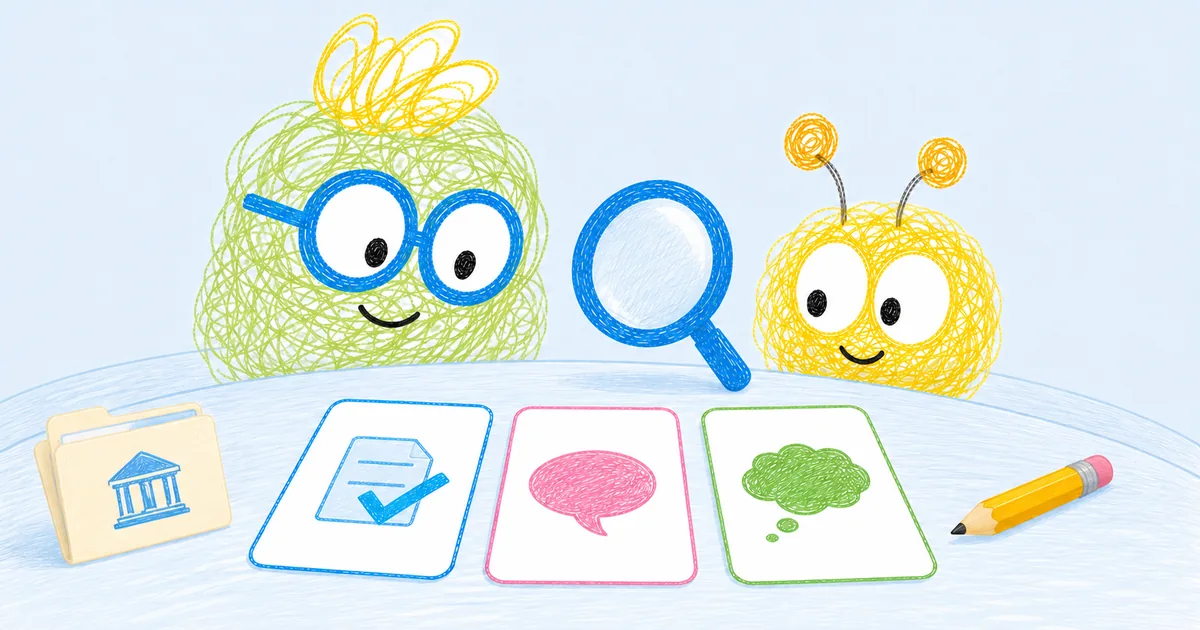
Scout and Pip look toward a magnifying glass and three evidence cards on a pale blue worktable.

Be a Source Detective

Sort three Lincoln claims, check what the sources really support, and repair each sentence together.

Lesson 4 · Make room for unfinished thinking

Some children speak while they are still forming an idea. Others need quiet before they can explain it. Either way, a fast answer isn't the only sign that learning is happening.

You can ask:

  • What part makes sense so far?
  • What are you still trying to figure out?
  • What could we check?
  • Did the source change your mind?

These questions keep the thinking visible without turning the conversation into a quiz.

Bring the habit to school

If your child rushes, freezes, or gets frustrated when work isn't immediate, share one specific observation with the teacher.

You might say:

We're practicing how to stay with one question and show what changed after checking a source. Is there a place they could use that process in class?

That keeps the conversation focused on a usable learning habit and invites the teacher's view.

Keep the history honest

Lincoln's life includes far more than a lesson about studying. A short family activity cannot explain his presidency, the Civil War, slavery, emancipation, or the people whose lives were shaped by those events.

When your child's question grows beyond this article, follow it into a full biography, a museum collection, or Lincoln's own papers.

Three Things Worth Remembering

Find one useful next part instead of solving everything at once.

Check where a claim came from before repeating it.

Revise your words when better evidence changes the picture.

Pause to Ponder

What is one thing your child once believed, then revised after learning more?
GROWN-UP PLAY BREAK

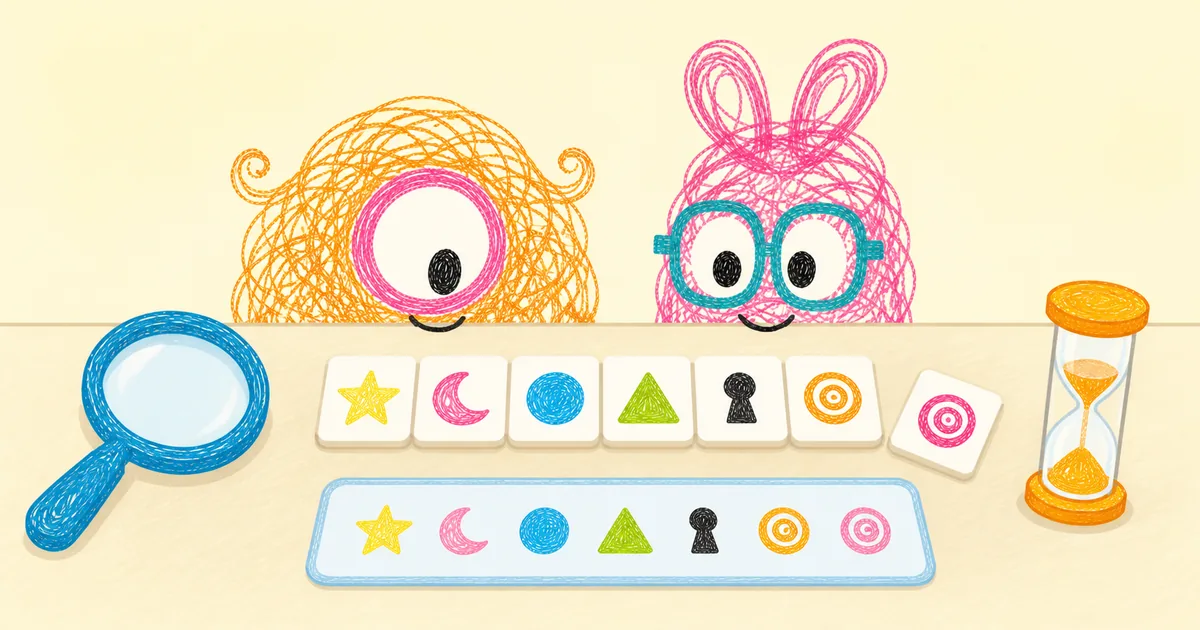
Decoder Ring

Use repeated symbols, word patterns, and a careful key check to crack three secret messages.

Take a Play Break

Keep going

Take the Quiz

Gather what you're noticing and find a useful next step for your child.

Take the Quiz